The Science Behind Effective Pest Control Services

Pest control looks simple from a distance. A customer spots ants in the kitchen, hears scratching in the attic, or finds a line of droppings behind a water heater, then calls for help. What happens next is often mistaken for a matter of spraying chemicals and waiting for the problem to disappear. In practice, effective Pest Control Services rely on biology, chemistry, building science, and a fair amount of pattern recognition. The best results come from understanding how pests live, what conditions help them thrive, and which interventions solve the problem without creating new ones.
Anyone who has spent time in the field learns this quickly. Two homes on the same street can have completely different pest pressures. One may battle German cockroaches because of moisture behind aging cabinets, while the next struggles with odorous house ants entering through tree limbs that touch the roofline. A treatment that works perfectly in one setting can be wasteful or ineffective in another. Science matters because pests are not random invaders. They follow food, water, shelter, temperature, and reproductive opportunity with remarkable consistency.
Why pests succeed in human environments
Most structural pests are successful for the same reason weeds thrive in disturbed soil. Human spaces create predictable, resource-rich habitats. Kitchens provide calories. Bathrooms provide moisture. Wall voids offer protection from weather and predators. Clutter reduces exposure. Exterior lighting attracts insects at night, which in turn attracts spiders and other predators. Landscaping planted too close to a structure can act like a bridge for crawling insects and rodents.
Pests also exploit the gaps in the way buildings age. Materials shrink, seals crack, caulk fails, doors warp, and roof penetrations loosen over time. A mouse needs only a surprisingly small opening to enter. Cockroaches flatten their bodies to slip through narrow spaces. Ants often use utility lines, foundation cracks, and expansion joints as travel corridors. Termites can exploit direct wood-to-soil contact or hidden moisture where a leak has gone unnoticed for months.
Temperature plays a powerful role. Many insects develop faster in warmth, but not always in a straight line. Their growth and activity often follow degree-day patterns, which means local weather can shift the timing and intensity of infestations. A mild winter may increase overwinter survival for some species. A rainy spring can drive others indoors. Good technicians pay attention not only to the pest but to the season, because seasonality changes behavior, breeding cycles, and where pests are likely to hide.
Identification is the first real treatment
The most important step in Pest Control Services is often the least dramatic: identifying the pest correctly. Misidentification leads to wasted time, unnecessary pesticide use, and recurring infestations that frustrate everyone involved.
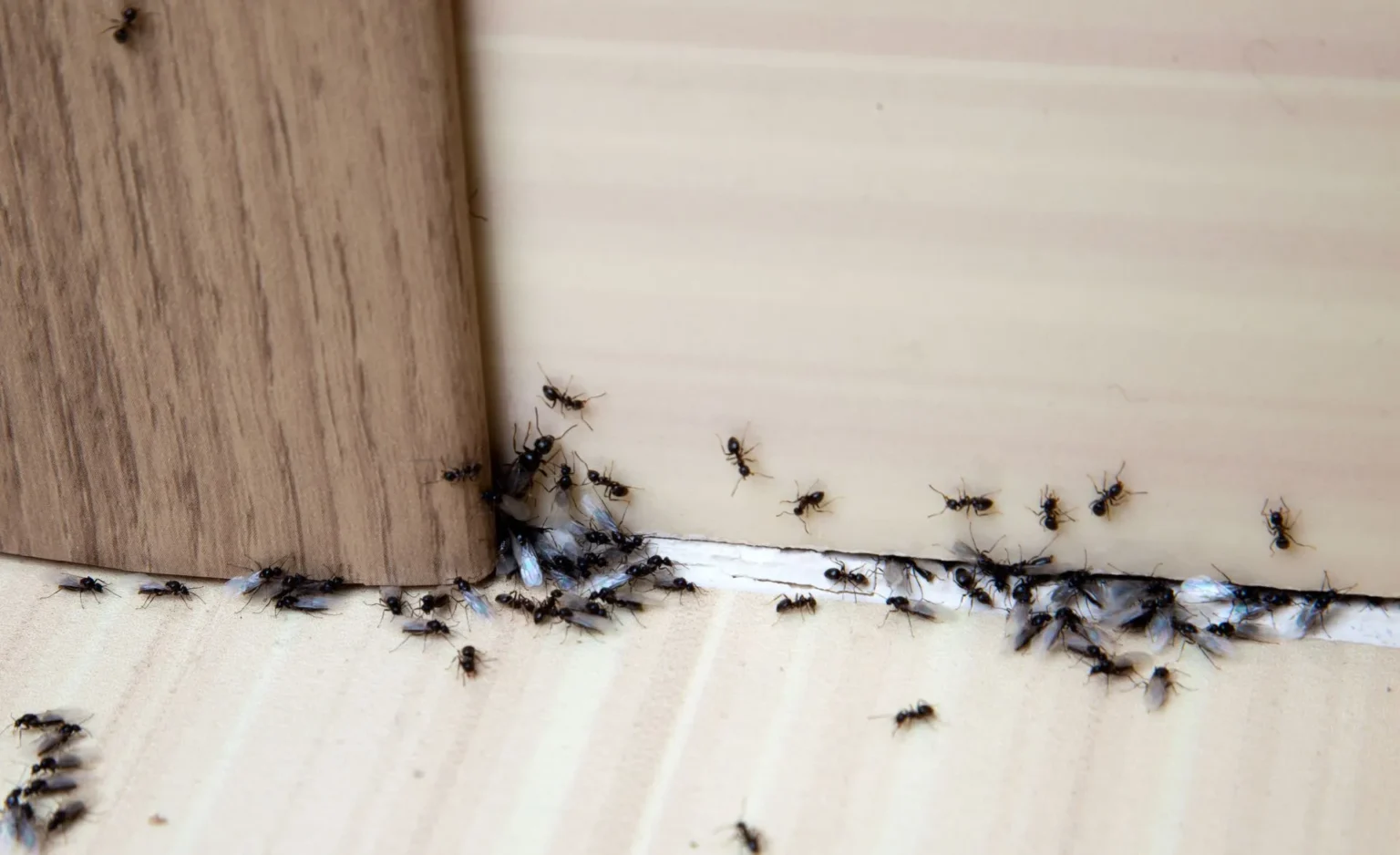
Take ants as an example. Homeowners commonly describe all small black ants as one problem. They are not. Pavement ants, carpenter ants, odorous house ants, and little black ants differ in nesting habits, food preferences, and response to treatment. Carpenter ants may signal moisture-damaged wood and can establish satellite nests in wall voids. Odorous house ants often split colonies under pressure, which means an ill-timed repellent spray can make the infestation spread rather than collapse. That is not a minor technicality. It is the difference between solving the issue in one visit or turning it into a month-long nuisance.
The same applies to cockroaches. Large American cockroaches in a basement or sewer-connected utility space call for a different approach than German cockroaches breeding inside kitchen appliances. The first may be tied to drainage, moisture, and exterior migration. The second usually requires tight placement of baits, insect growth regulators, sanitation improvements, and repeated follow-up. Confusing one for the other can derail a treatment program from the start.
Rodent work is just as dependent on species-level thinking. Norway rats tend to burrow and travel low, often along foundations and lower floors. Roof rats are stronger climbers and are more likely to use overhead routes, dense vegetation, and attics. House mice can live within a very small home range if food is close by. Knowing the animal changes trap placement, exclusion strategy, and the areas that need inspection.
The biology that drives control decisions
Every effective control program is built around life cycles. Pests reproduce at different speeds, and that affects how quickly a small issue becomes a serious one. German cockroaches are a classic example. Under favorable indoor conditions, populations can expand rapidly because females carry egg cases and nymphs develop in protected harborage close to food and warmth. Seeing a few during daylight often suggests a larger hidden population, because heavy competition may force them into more exposed areas.
Bed bugs present a different biological challenge. They do not live on people like lice or fleas. They hide in seams, cracks, screw holes, and nearby furnishings, then emerge to feed, often at night. Their flat bodies and cryptic behavior make them easy to miss during superficial inspections. Eggs are resistant to many products that kill active stages, which is one reason follow-up treatments matter. Heat can be highly effective when applied correctly, but it must reach lethal temperatures in the right places for the right duration. A room thermometer reading high is not enough if the core of a cluttered couch or the inside of a wall void stays below target.
Termites are another case where biology shapes strategy. Subterranean termites live in colonies that depend on moisture and contact with soil. They build mud tubes to maintain humidity while moving between ground and wood. Drywood termites behave differently and may live entirely within the wood they consume. The inspection methods, signs of activity, and treatment plans are not interchangeable. That distinction matters when a property owner is trying to decide between localized treatment, baiting systems, or broader soil-applied termiticide work.
Even flying insects that seem straightforward can be tricky. Fruit flies, drain flies, and fungus gnats are often lumped together because they are small and annoying. Yet their breeding sources differ sharply. Treating the air will not solve a drain fly problem if the gelatinous organic film inside the drain remains intact. The science says remove the breeding substrate, not just the adults people happen to notice.
Chemistry helps, but only when it is used with precision
Pesticides remain an important tool, but their effectiveness depends on formulation, placement, dose, timing, and pest behavior. A broad statement like “spray for bugs” ignores the differences between contact insecticides, residual products, baits, dusts, aerosols, insect growth regulators, repellents, and non-repellents. Each serves a specific purpose.
Baits are a good example of science applied in a practical way. Instead of trying to hit every individual insect directly, a bait takes advantage of foraging behavior. Workers locate the bait, consume it, and share it within the colony through trophallaxis or contamination. When this works well, the toxicant spreads farther than a surface spray ever could. But baiting has limits. If competing food is abundant, acceptance can drop. If a repellent product was used recently nearby, the foraging pattern may shift. If the wrong bait matrix is selected, the target species may simply ignore it.
Residual insecticides work differently. They create treated surfaces that affect pests after contact. This can be useful along travel paths, entry points, or harborages, especially when the product matches the target pest and environment. Yet residues degrade. Sunlight, heat, dust, porous surfaces, and cleaning practices can shorten effectiveness. Exterior perimeter applications may help for certain occasional invaders, but they are not a cure-all. Heavy rain, irrigation, or dense mulch can reduce performance dramatically.
Rodenticides are another area where science and judgment have to meet. Anticoagulants and non-anticoagulants differ in mode of action, risk profile, and operational use. Professionals also weigh non-target exposure, tamper resistance, legal restrictions, and environmental conditions before placing bait. In many settings, especially where children, pets, or wildlife are present, exclusion and trapping may deserve more emphasis than people expect.
Resistance adds another layer. Some pest populations become less susceptible to active ingredients after repeated exposure over time. This is well documented in several urban pests, including bed bugs and certain cockroach populations. It is one reason experienced technicians rotate chemistries thoughtfully and avoid overreliance on a single product category.
Inspection is where professional judgment shows up
The public tends to notice the treatment, but the inspection is usually where the value lies. A careful inspection reveals why the infestation exists, how the pests are moving, and what will keep the problem from returning. It also separates a service visit from guesswork.
A good inspector reads signs the way a mechanic reads engine noise. Rodent rub marks, insect frass, cast skins, grease trails, nesting material, moisture staining, gnaw patterns, mud tubes, and odor all tell part of the story. So does the absence of signs in places where people expect to find them. If an attic has scratching sounds but no droppings, no insulation disturbance, and no entry points at the eaves, the source may be tree branches on the roof or even a different structure entirely.
Moisture mapping often becomes central, especially with termites, cockroaches, and occasional invaders that cluster around damp conditions. In one multi-unit building, what seemed at first to be a recurring roach treatment issue turned out to be a plumbing problem inside a shared wall. Until the leak was repaired, the warm damp void continued to support activity despite repeated applications. Once the moisture source was removed and sanitation improved, the population dropped quickly. That is a common field lesson: the pesticide may reduce numbers, but the environment determines whether they rebound.
Inspection also benefits from understanding occupant behavior. Pet food left overnight, cardboard storage in humid basements, overfilled recycling bins, and bird seed in garages can all sustain pest populations. This is not about blaming residents. It is about identifying the conditions pests exploit. Effective Pest Control Services require cooperation because the science does not stop at the product label.
Integrated pest management is not a buzzword when done properly
Integrated pest management, often shortened to IPM, is sometimes presented so vaguely that it sounds like a marketing phrase. In practice, it is a disciplined way of solving pest problems with the least disruptive mix of methods. The science behind IPM is straightforward: reduce the factors that support pests, monitor activity, apply targeted treatments only where justified, and adjust based on results.
In structural pest control, the core elements usually include the following:
- Accurate identification of the pest and its biology.
- Inspection to locate entry points, harborages, moisture, and food sources.
- Corrective actions such as exclusion, sanitation, habitat modification, and repairs.
- Targeted use of pesticides or traps when non-chemical measures alone are not enough.
- Monitoring and follow-up to confirm that the problem is actually resolved.
This approach works because pest pressure is rarely caused by one thing. It is usually an interaction of access, resources, and opportunity. Seal a gap but leave standing water and spilled kibble nearby, and the problem may continue. Apply bait without addressing clutter and grease buildup, and roaches may persist in protected zones. Remove a wasp nest but leave favorable harborage around eaves, and another colony may establish later in the season.
IPM also helps with edge cases. Sensitive environments such as schools, healthcare facilities, restaurants, and homes with chemically sensitive occupants demand tighter decision-making. In those spaces, product choice, timing, ventilation, and communication matter as much as the treatment itself. A broad residual application may be less appropriate than vacuuming harborages, sealing gaps, using crack-and-crevice placements, and deploying monitors to measure results.
Why exclusion often outperforms repeated treatment
If there is one principle field professionals return to again and again, it is that exclusion has staying power. Chemical control can reduce existing populations, but preventing re-entry often delivers the longest-lasting return.
For rodents, exclusion means more than stuffing a visible hole with steel wool. Successful work considers gnawing behavior, building movement, and material durability. Expanding foam alone usually fails because rodents can chew through it. Better repairs might involve metal flashing, hardware cloth of the proper gauge, concrete patching, door sweeps with reinforced edges, and weather-resistant sealants that suit the substrate. The repair has to hold through heat, cold, vibration, and seasonal expansion.
For insects, exclusion can include door sweeps, screened vents, sealed utility penetrations, repaired window frames, trimmed vegetation, and changes to exterior lighting. Even gutter maintenance can matter. Clogged gutters hold moisture and organic debris, which can support mosquitoes and attract other nuisance pests. In some homes, simply reducing foundation moisture and improving crawlspace ventilation changes the pest profile noticeably within weeks.
There is a trade-off, of course. Exclusion takes labor, and labor is visible on the invoice. Some clients initially prefer repeat treatments because they seem simpler. Over time, though, repeated service without correcting structural access tends to cost more and perform worse. The science is blunt on this point. When the habitat stays favorable and access remains open, pressure returns.
Monitoring turns pest control into evidence-based work
One mark of a strong service program is that it measures https://laneodgn454.hexaforgey.com/posts/pest-control-services-for-healthcare-facilities-and-clinics what is happening rather than relying only on impressions. Monitoring tools provide that evidence. Sticky traps, pheromone traps, insect light traps, termite stations, bed bug interceptors, and rodent tracking methods all help confirm activity levels, identify hotspots, and evaluate whether a treatment is working.
This matters because perception can be misleading. After a cockroach treatment, residents may report seeing more roaches for a few days. That can happen because disturbed insects leave harborages and die in more visible places. Without monitoring, that temporary increase may look like failure. With monitoring, a technician can compare trap counts before and after treatment and judge the trend more accurately.
Monitoring is also critical in commercial settings. A food facility, for example, may use trend data from traps to identify recurring pressure around dock doors, floor drains, or ingredient storage. That information supports corrective action before the issue becomes an audit problem or a contamination risk. The science here is simple but powerful: what gets measured gets managed.
The human factor is part of the science
Pests live in buildings, but they interact with people. Effective Pest Control Services depend on communication almost as much as on treatment methods. Occupants need realistic expectations, especially for pests that require multiple visits or changes in housekeeping and storage.
Bed bug cases often illustrate this best. Successful management may require laundering at high heat, reducing clutter, encasing mattresses, preparing rooms for access, and avoiding the common mistake of moving infested items into other parts of the home. Without clear instructions and cooperation, even technically sound treatments can underperform.
The same is true in restaurant accounts. A kitchen may receive excellent routine service, but if drains are not cleaned, gaps around incoming deliveries are not managed, and food debris accumulates under equipment, pest pressure can rebound. Science identifies the cause, but people have to change the conditions.
There is also the issue of risk perception. Many customers worry more about the treatment than the pest, while others underestimate the health and structural consequences of infestations. A professional has to navigate both concerns honestly. Not every pest is a major public health threat, but some certainly are. Rodents can contaminate food and spread pathogens through urine and droppings. Cockroach allergens are linked to asthma triggers, especially in children. Termites can cause substantial structural damage over time. The response should match the real risk, neither minimizing nor exaggerating it.
Seasonality, geography, and local knowledge
Science gives general principles, but local experience sharpens them. The pest pressures in a humid coastal region differ from those in a dry inland climate. Construction style matters too. Slab-on-grade homes, crawlspaces, basements, high-rise apartments, and historic wood-framed buildings each create different opportunities for pests.
Seasonality can change not only which pests appear, but how they should be managed. Spring often brings ant foraging, termite swarms, and overwintered occasional invaders becoming active. Summer can intensify mosquito and fly pressure. Fall frequently drives rodents indoors as outdoor resources decline. Winter shifts many service calls toward indoor sheltering pests and latent infestations that become more noticeable when windows stay closed and people spend more time inside.
This is why scripted treatment plans have limits. A program that makes sense in one region may underperform in another if it ignores local species, weather patterns, and building conditions. Strong providers combine broad scientific training with ground-level familiarity. They know which ant species become problematic after heavy rain, which neighborhoods see chronic roof rat movement because of mature tree canopy, and which construction details tend to create hidden moisture at sill plates or utility chases.
What separates effective service from superficial service
The difference is rarely the amount of pesticide used. More often, it is the quality of the diagnosis and the discipline of the follow-through. Effective providers explain what they found, what they treated, why they chose that method, what conditions need correction, and what signs should be monitored next. They do not promise impossible timelines or one-size-fits-all fixes.
Several practical signs usually indicate a stronger approach:
- The technician inspects before treating and asks detailed questions.
- The service notes identify the pest, location, contributing conditions, and materials used.
- Recommendations include sanitation, exclusion, moisture control, or repairs when relevant.
- Follow-up is scheduled or advised based on the pest’s life cycle, not just convenience.
- Expectations are stated clearly, including what improvement should look like over time.
That kind of service reflects scientific thinking. It recognizes that pests are biological systems interacting with physical structures and human habits. The goal is not simply to kill what is visible today. It is to interrupt the conditions that allow the infestation to persist.
The best pest control work can look almost uneventful from the outside. A door sweep gets replaced. A leaking trap under a sink is repaired. A bait is placed where foragers actually travel, not where it is easiest to reach. A technician notices frass that others missed, identifies the species correctly, and adjusts the plan before the problem escalates. None of that is flashy. All of it is effective.
Science, in this field, is less about spectacle and more about precision. It asks the right questions. What species is this? Why here? Why now? Where is it breeding, feeding, or entering? Which intervention fits its biology and the building’s conditions? When those questions are answered carefully, Pest Control Services stop being reactive and start becoming reliable. That is where lasting control begins.
Affordable Pest Solutions LLC
Phone number: +19732299547
FAQ About Pest Control Services
How much does pest control charge?
For a standard 1,500-square-foot home, professional pest control charges generally average $100 to $300 for an initial visit, with ongoing monthly services running $40 to $75 per visit and one-time emergency exterminations costing $100 to $600, depending heavily on the specific pest and the severity of the infestation.
What is the hardest pest to get rid of?
Bed bugs are widely considered the hardest household pest to get rid of, closely followed by German cockroaches and subterranean termites.
What is included in a pest control service?
A standard pest control service includes a property inspection, targeted treatments, and prevention advice. It typically covers common pests like ants, spiders, and cockroaches, using sprays, baits, or traps.